/icon_text_light_svg.svg)

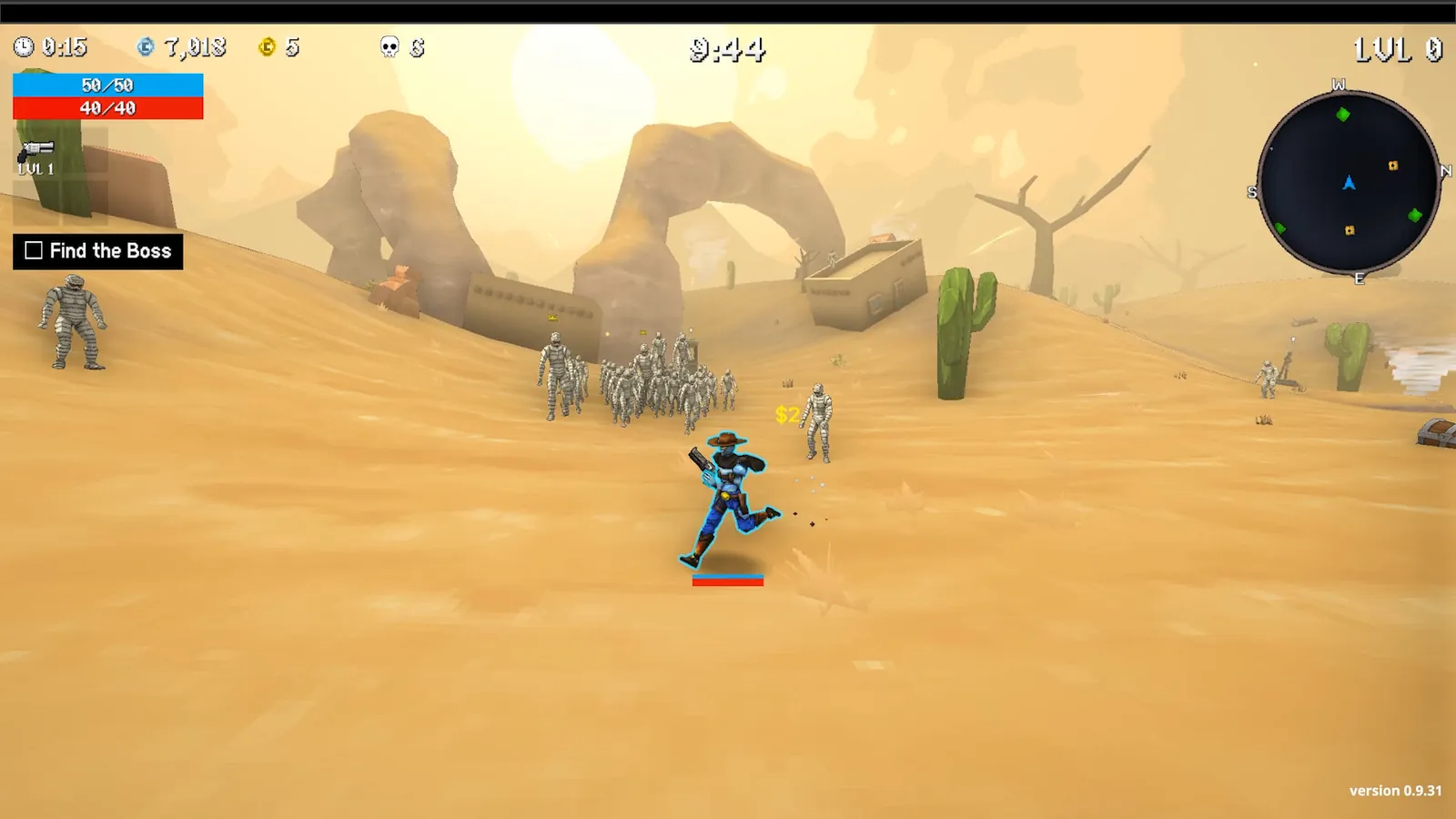
You can make a game like Megabonk with Chatforce: choose 3D when you create it, describe the game in chat, and play a first version in about 10 to 15 minutes. Chatforce is a tool where you describe a game in chat and AI agents build it, in 2D or 3D, single-player or multiplayer. Describe it to Chatforce like this: start with how the player moves and jumps, one wave of enemies, and a level-up choice that changes how the player handles the crowd. Then add more upgrades that combine, and play short runs to tune the pressure in chat. The survival starting point covers the base loop.
Play Megabonk style games made on Chatforce
These games were made and published on Chatforce. Open one to see how another creator turned a similar idea into a browser game.
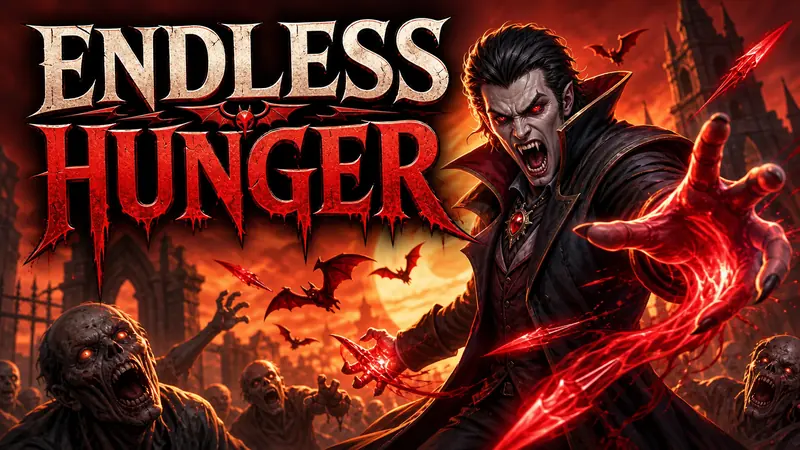 Endless HungerMade with Chatforce
Play a vampire mowing down swarms with auto-firing powers that level up each run.
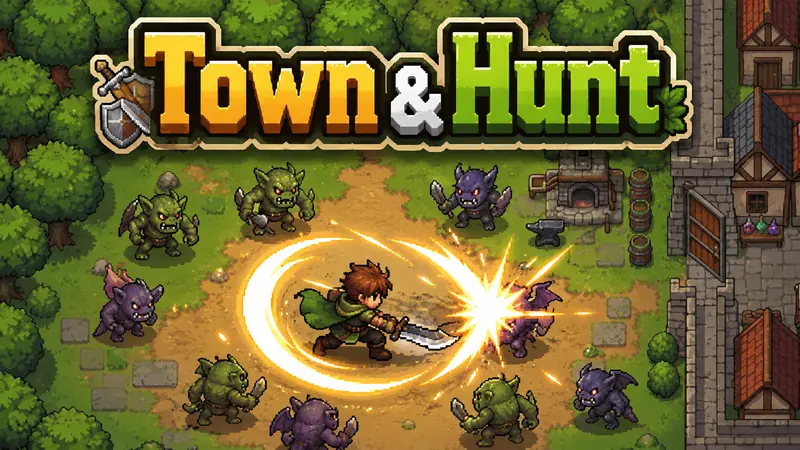 Town & HuntMade with Chatforce
Hunt monsters in arena runs, bring loot home, and upgrade a town hub between runs.
Let movement solve the crowd
Make movement solve the crowd: a gap can break an encirclement, a ramp buys time, and a dodge cuts through a weak enemy line. Keep arena obstacles visible so they create routes without hiding threats. Level-up choices drawn at random give each run the roguelike feel of a new build.
Upgrades should alter how the player moves through danger. A spinning tool might widen its orbit after each pickup, while a shock pulse rewards staying close to a cluster. Another item could leave a short trail that slows pursuers after a dash. Show the current build in a compact set of icons and communicate each new effect with a distinct animation. A level-up choice is most satisfying when the player can picture a different route or attack pattern immediately, not only a higher damage number. Sound effects for each pickup make upgrades easy to notice.
| Design choice | What to decide |
|---|---|
| Dimension | Use 3D for circling enemies, finding lanes, and reading terrain at speed. |
| Movement kit | Choose a quick dodge, jump, or burst that creates space with a cost. |
| Attack model | Decide which attacks are automatic and how the player aims active skills. |
| Upgrade pool | Define items that combine, change a weapon, or reward a risky route. |
| Run pacing | Set wave timing, level-up intervals, and a clear end condition. |
Build a run around space and choices
Choose a 3D arena and camera
Pick 3D at creation because the core skill is navigating around a moving crowd in a space with depth. Chatforce creates real-time worlds with generated models, lighting, and a directable camera. Describe a compact arena with a ground plane, a few ramps, and obstacles that do not hide enemies for long. Use a camera angle that keeps the player centered while showing enough of the route ahead. Horde survivor is a popular style for 2D games, so spell out this 3D arena and survival loop in your prompt.
Give the player a reason to keep moving
Define a responsive base speed and one movement tool, such as a short dash with a visible cooldown. Give enemies different approach patterns: a slow group that closes space, a fast unit that cuts off a turn, and a ranged threat that asks the player to break line of sight. Start the run with automatic basic attacks so movement stays central, then add one aimed ability that the player chooses when to use. Make damage and temporary invulnerability readable so a successful dodge feels earned rather than random.
Offer upgrades that combine in visible ways
Describe a level-up choice with three distinct options: a weapon change, a movement improvement, or a defensive effect. Give items simple tags so certain combinations can create a new behavior, such as a frost ring that makes a dash leave slowing patches. Explain the combination rule directly in the prompt and ask for an in-run preview before selection. Keep the initial pool small enough to recognize after a few attempts. If two upgrades do the same job, change one to reward a different distance, enemy shape, or travel path.
Increase the wave in readable stages
Build a short run with calm opening seconds, then add a new enemy role every few waves. A level-up should usually arrive just before the arena grows crowded, giving the player a moment to choose a response. Add a strong enemy as a timed milestone and telegraph its most dangerous attack with a ground marker. End the first run at a clear survival goal, such as reaching a beacon after several minutes. Once the pacing works, ask for a second arena modifier that changes movement without obscuring attacks.
Example prompt: Make an original 3D horde survivor called Rotor Run, set in a wind farm floating above a cloud sea. The courier moves quickly, has one short dash, and automatically swings a crescent tool at nearby creatures. Enemies approach from visible lanes, and every level offers three choices: an attack, a movement change, or a defense. Let two original upgrades combine so a dash can leave a brief gust that pushes small foes away. Create a readable camera, a six-minute first run, and a beacon goal. Use original names, creatures, art, music, and story.
Tune the run by watching where space disappears
Replay builds that favor different distances. If a player is surrounded too early, delay a fast enemy or add an escape route. If one upgrade makes every run feel alike, reduce its reach. Check whether the crowd hides attacks or obscures why a dash failed. Tell Chatforce about that moment, adjust one spawn rate or ability, and replay. Short runs with a score also fit arcade game design.
Share a replayable arena
Publish when a new player can learn movement, choose an upgrade, and reach the first milestone. Chatforce publishes a browser-playable game at a shareable URL, and friends can play without an account. For co-op, describe group loot choices and enemy pressure. Multiplayer supports up to 8 players per room. You own the work, and published games have no watermark. If you are comparing AI tools for a 3D game, Chatforce vs Astrocade covers one alternative.
Frequently asked questions
Can I make a direct copy of Megabonk?
Use Megabonk as a reference for a 3D horde survivor with active movement. Make original names, characters, enemies, art, music, item effects, and story, with your own upgrade combinations.
Should this horde survivor be 2D or 3D?
Choose 3D if circling enemies and using arena depth are central to your design. You choose 2D or 3D when you create the game, so describe the intended movement and camera before starting.
Can friends join a horde run?
Chatforce supports online multiplayer in 2D and 3D for up to 8 players per room. Describe whether enemies scale with the group and how upgrade choices should work for co-op.
Related pages: Make a survivors game with AI · How to make a game with AI · Horde survivor maker · Games like Vampire Survivors · 3D game maker